Construction Site Security in Colorado Springs: How to Protect Your Equipment, Materials, and Schedule
November 23, 2026
If you have ever pulled up to a job site on a Monday morning and found a cut fence, a missing generator, or a bare spot where a pallet of copper used to be, you already know how this goes. The theft itself is only the beginning. Then comes the police report, the insurance call, the replacement order that takes two weeks to show up, and a crew standing around waiting on a tool that walked off over the weekend.
Construction sites are some of the easiest places for a thief to work. They are open, they are full of valuable things, and for a big chunk of every week they are empty. That is a tough combination, and it is why construction site security in Colorado Springs deserves a spot in the project plan right alongside the schedule and the budget.
This guide walks through what you are really up against, what a solid security plan looks like, where guards fit in, and what to ask before you hire anyone. Whether you are building a custom home, a retail center, or a warehouse, the same ideas apply.
Why Construction Sites Are Such Easy Targets
A finished building has locks, alarms, and walls. A job site has none of that for most of its life. A few things make construction sites especially attractive to people looking for a quick score.
- Lots of valuable, portable stuff. Power tools, generators, copper wire, appliances, fuel, and building materials are easy to carry and easy to sell.
- Open layouts. Many sites have wide gaps in fencing, multiple entrances, and big areas where nobody can see the whole property at once.
- Dark and empty after hours. Once the crew leaves, the site can sit quiet for twelve hours on a weeknight and more than sixty over a long weekend.
- Constant traffic. Subcontractors, delivery drivers, inspectors, and suppliers come and go all day, so a stranger in a hard hat does not always stand out.
- Temporary everything. Temporary fences, temporary lighting, and temporary gates all have gaps that a permanent building would not.
None of this means your crew is careless. It just means a job site is built to get work done, not to keep people out. Security has to be added on purpose.
The Real Cost of a Bad Weekend
When people think about job site theft, they usually think about the value of whatever was taken. That number is real, but it is often the smaller part of the problem.
Start with the deductible. Many contractors carry a deductible high enough that a single theft of tools or materials is not worth filing a claim over, so the loss comes straight out of the project. Then add the replacement time. A missing piece of equipment may take days or weeks to replace, and the work that depends on it slows down or stops. If you are on a tight timeline with a client waiting, those delays cost far more than the stolen item.
Then there is vandalism. Graffiti, broken windows, damaged framing, and wrecked equipment all have to be fixed, sometimes redone, before work can continue. If a site gets a reputation for being an easy mark, it tends to get hit again.
A good rule of thumb is to compare what a few months of site security costs against what one serious incident would do to your schedule and your budget. For many projects the math lands on the side of protection pretty quickly.
What Actually Gets Stolen From Construction Sites
Thieves tend to go for things that are easy to move and easy to resell. On a typical Colorado Springs job site, that usually means:
- Copper wire, pipe, and fittings, especially once rough in work is done
- Power tools, hand tools, and tool trailers
- Generators, compressors, and light towers
- Fuel, diesel tanks, and fluids from heavy equipment
- Appliances, fixtures, and HVAC equipment waiting to be installed
- Lumber, roofing material, and other building supplies
- Heavy equipment and attachments, including skid steers and small excavators
What Makes Colorado Springs Job Sites Different
Local conditions shape how you should think about site protection. A few things stand out for builders in the Pikes Peak region.
First, Colorado Springs keeps growing. New neighborhoods, commercial pads, and infill projects are going up all over the area, and many of them sit in open or half developed areas where there are few neighbors to notice anything unusual. A lot with no one around at night is exactly the sort of place a thief likes.
Second, winter changes the clock. When the sun sets before five in the afternoon, a site can be dark for a long stretch before anyone comes back the next morning. That is a long window, and it happens every day for months.
Third, the weather itself creates openings. Heavy snow can bury fencing lines and hide tracks, wind can knock down temporary fencing, and a hailstorm can leave a site in a mess that takes days to sort out. A property that is already chaotic is harder to monitor, and damaged fencing can sit unnoticed.
The Layers of a Strong Job Site Security Plan
No single tool solves job site theft. The best results come from layering a few measures so that if one fails, another catches the problem. Here is how the layers fit together.
Fencing and Physical Barriers
A solid perimeter is the first thing a would be thief sees. Fencing will not stop someone who is determined, but it slows them down and forces them to make noise, which buys time. Check it often. A fence with a gap, a loose panel, or a gate that does not latch is only a suggestion.
Lighting
Good lighting makes people think twice. Thieves prefer to work in the dark, and a well lit site makes it harder to move around unseen. Light towers and motion lighting around equipment, entry points, and material storage are worth the money, especially in winter when darkness arrives early.
Cameras and Monitoring
Cameras give you a record and sometimes a deterrent, but a camera nobody is watching only tells you what happened after it is too late. Live monitoring changes that. When someone is watching the feed in real time, they can talk down a trespasser, call the police, or send a guard to check. That is the idea behind virtual guard services, where trained operators watch your cameras and respond the moment something looks wrong.
Access Control
Knowing who is on your site is half the battle. A single controlled entry point, with someone checking credentials and logging visitors, closes off one of the easiest ways for outsiders to walk in. A guard at the gate fills this role well, so authorized workers get in and everyone else gets a polite question.
On Site Security Guards
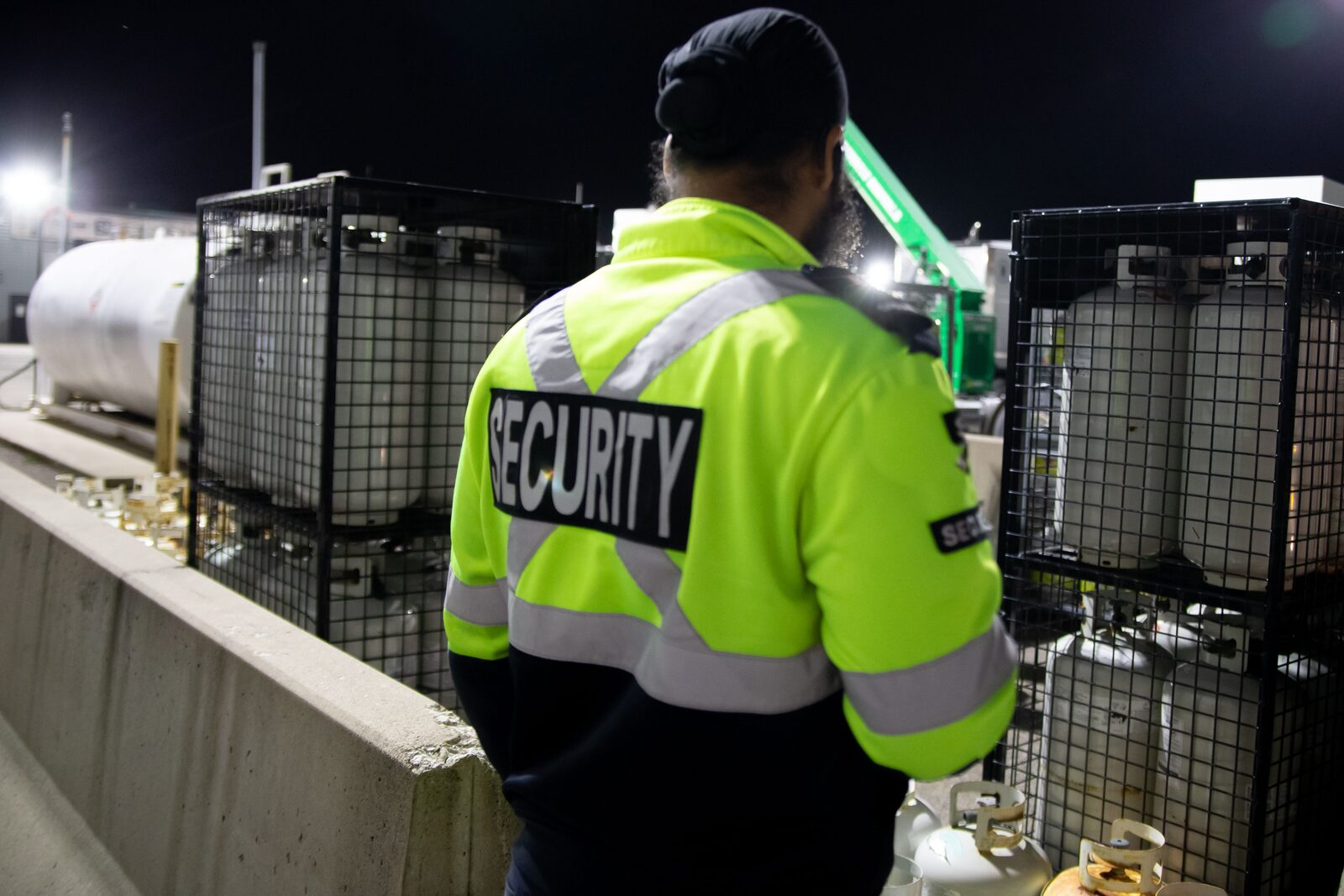
A uniformed guard is the layer that can actually do something. They patrol, they check on suspicious activity, they verify who is on site, and they document what they see. Just as important, a visible guard is a deterrent. Many thieves will skip a site where they can see someone watching and move on to an easier target.
What a Construction Site Guard Actually Does
It helps to know what you are paying for. A good construction site guard does a lot more than sit in a truck. Here is what the job usually involves.
- Walks and drives the site on a regular patrol, checking fences, gates, trailers, storage areas, and equipment.
- Controls the gate or entry point, verifying workers, subcontractors, and delivery drivers and keeping a visitor log.
- Watches high value areas, like material laydown yards, tool trailers, and fuel storage.
- Spots and reports problems, such as damaged fencing, open gates, or unusual activity, before they turn into losses.
- Responds to incidents, calling law enforcement when needed and keeping the scene secure until they arrive.
- Documents everything, so you have clear incident reports for your insurance carrier, your general contractor, or the police.
Vigilant Tiger Security provides this kind of coverage through its construction site security services, including on site guards, mobile and foot patrols, after hours coverage, and access point monitoring. Their officers are former or active law enforcement or combat military veterans who go through de-escalation and patrol training, which matters when a situation needs a calm head.
Overnight, Weekend, and Holiday Coverage
If you only protect the site during working hours, you are protecting it when it needs it least. The highest risk windows are the ones when nobody is around: overnight, over weekends, and on holidays. A three day weekend is a long time for a thief to take a look around, come back with a truck, and load up.
For many projects, the smartest use of a security budget is after hours coverage. A guard on site overnight, or a mix of patrols and live camera monitoring, covers the stretch when your crew is gone and the risk is highest. Some builders also add coverage for the first and last hours of the workday, when deliveries and crews are arriving and leaving and gates tend to be open.
Match Your Security to the Stage of the Project
A site does not have the same needs from start to finish. Matching your coverage to each stage can save money and close gaps.
- Site prep and grading: The main targets are heavy equipment and fuel. Secure the equipment, protect fuel storage, and put up the perimeter early.
- Framing and shell: Lumber and materials are the draw, and open structures are easy to walk into. Controlled access and regular patrols matter here.
- Rough in: Copper wire and pipe go in, and so do the thieves who want them. This is a high risk stage, and tighter coverage pays off.
- Finish work: Appliances, fixtures, and HVAC equipment arrive. Keep a close eye on deliveries and what is stored inside.
Good security companies will adjust the plan as the project changes. Ask about that up front.
What to Ask Before You Hire a Security Company
A bad fit can leave you paying for coverage that does not do much. Here are some questions worth asking.
- Are your guards licensed and trained, and what ongoing training do they receive?
- Have you worked on construction sites before, and can you speak to the specific risks?
- Can you cover nights, weekends, and holidays, and how do you handle call outs?
- How do guards document incidents, and how quickly will I get a report?
- Can the plan change as the project moves through its phases?
- Do you offer a mix of guards, patrols, and camera monitoring so I can match coverage to the budget?
- Are you local, and how quickly can someone get to my site?
Local matters more than people expect. A company based in Colorado Springs knows the area, the weather, and the quirks of local sites, and can get someone to you quickly when something happens.
What Construction Site Security Costs
Pricing varies because every project is different. The main factors are how big the site is, how many hours of coverage you need, how many guards the job calls for, and how long the project will run. A site that needs a single overnight patrol will cost far less than one that needs a guard at the gate around the clock.
Instead of guessing, ask for a site walk and a custom quote. A good provider will look at your layout, your schedule, and your risk level, then recommend a plan that fits. And if the number feels high, ask what you can adjust. Often you can combine virtual guarding for off hours with guards during higher risk stages and bring the total down without leaving gaps.
A Note for Builders Who Also Run Yards and Warehouses
If your company also stores materials and equipment in a yard or warehouse, many of the same principles apply there too. Theft often happens at loading areas and exit points, not just fences. Our post on warehouse security in Colorado Springs covers how guards, cameras, and monitoring work together to stop losses before they leave the dock.
Frequently Asked Questions About Construction Site Security
How much does construction site security cost in Colorado Springs?
It depends on the size of the site, the hours you need covered, how many guards the job calls for, and how long the project will run. A fenced residential lot that needs overnight patrols costs a lot less than a multi building commercial development that needs a guard at the gate around the clock. The best way to get a real number is to have a security company walk the site and quote it based on your risks and schedule.
Do I need security guards if my site already has fencing and cameras?
Fencing and cameras are a good start, but they mostly record what happened or slow someone down. A guard is the piece that can respond in the moment, check who is on site, and stop a problem before something leaves in the back of a truck. Many builders pair guards or virtual guarding with cameras so someone is actually watching the footage.
When is a construction site most likely to be hit?
Nights, weekends, and holidays are the usual windows, because nobody is on site and thieves know it. Early winter darkness in Colorado means many sites are dark by late afternoon, which gives a thief a long window before anyone returns in the morning. Stages with a lot of loose material, like framing and rough in, tend to be especially attractive.
Can a guard control who comes and goes on the site?
Yes. Guards can verify workers and subcontractors at the gate, log deliveries, and turn away anyone who does not belong. That log is also useful when something goes missing, because you have a record of who was on site and when.
Can security coverage change as the project moves along?
It should. A site in the excavation phase has different risks than one with copper wire and appliances inside. Good coverage grows, shrinks, or shifts as the build moves through its stages, so you are not paying for protection you do not need or going without it when you do.
Do you need security for a short project or a one time equipment delivery?
Often, yes. Short term coverage makes sense for a big equipment drop, a pour that runs late, or a project that is only on site for a few weeks. It is often a smart call when high value material is sitting on site for a short stretch.
Ready to Protect Your Job Site?
Construction runs on tight schedules and thin margins, and one bad weekend can set a project back more than you expected. A little planning up front, and the right people watching the site when your crew goes home, goes a long way.
Vigilant Tiger Security is a veteran founded, locally operated company that protects job sites across Colorado Springs and the surrounding area. If you want a second set of eyes on your next project, reach out for a quote and we will talk through what your site actually needs.

Written By:
NLA Media
